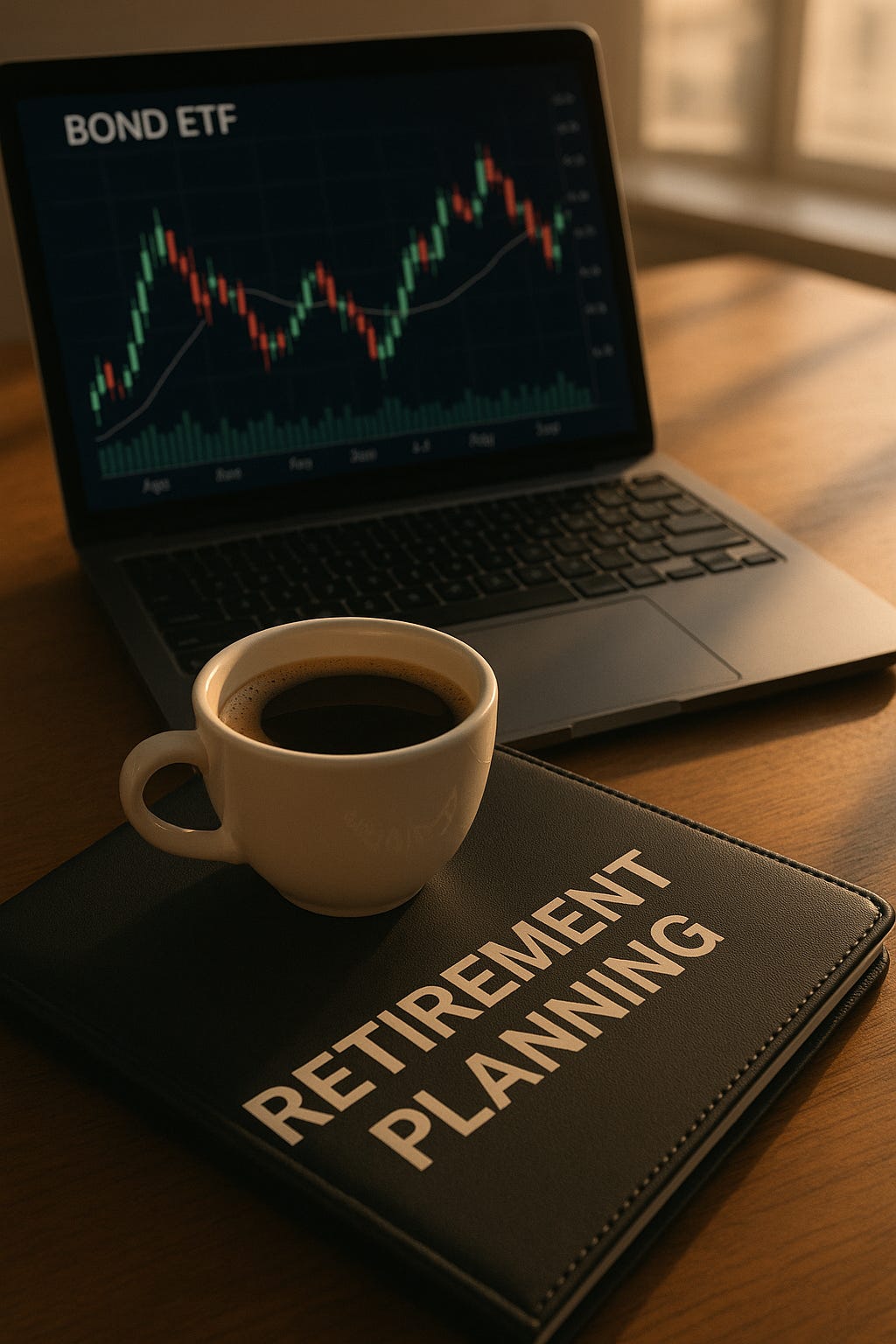
For too long, bonds were treated like the defensive line in football, before the winning play, crucial for holding ground, but the excitement is reserved for the offense. But that’s changed. Yields are finally worth your attention again. After a decade of near-zero interest rates, the bond market is offering something it hasn’t in years: income.
If you’re between 40 and 70 years old, either approaching retirement or already in it, bonds aren’t optional—they’re essential. Your investing goals are changing. Preservation of capital matters more than moonshot returns. Stability matters more than volatility. But let’s be clear: you still need growth, especially with inflation not done with us yet. That’s where today’s bond market—yes, this bond market—steps in with yields north of 3.5% without forcing you to take high risk.
Let’s dive into what’s out there for everyday investors looking to earn consistent, reasonable returns from fixed income without getting eaten alive by risk or fees.
Why Bonds Belong in Your Portfolio—Especially Now
For investors in their 40s, 50s, and 60s, bonds provide three critical things:
-
Income – A reliable paycheck in retirement or a supplement to your day job.
-
Stability – Bonds help cushion equity drawdowns. When stocks fall, high-quality bonds often hold their value or even rise.
-
Predictability – You know what you’re getting. When you buy bonds (or bond funds), you’re buying defined returns over time.
After years of being yield starved, short- and medium-term bonds now offer legitimate income again, with less of the wild price swings you’ll find in long-duration bonds. The reality is that some of the stocks that provide dividend income are wallowing, the share prices are dropping, which means the payout at a 3% rate is not worth as much as many bonds. If enough of the stock value is curtailed, then those companies may need to trim the payout % they give.
And for those wary of market timing: bonds allow you to ladder into returns—buying across various durations to manage reinvestment risk, interest rate volatility, and income stability.
Let’s look at what’s on the shelf.
The Bond Buffet: Where 3.5%+ Income Is Back on the Menu
We’ll stick to short- and medium-term bond ETFs and funds—the sweet spot for risk-conscious investors who still want solid income. These investments span the safety-first U.S. Treasury space, the tax-efficient municipal market, investment-grade corporate bonds, and international diversification. We’ll touch briefly on high-yield (junk) bonds, but they’re not the headliner here.
All these options are easy to buy via a brokerage account. Most pay monthly. All are liquid. And none require gambling with your nest egg.
1. U.S. Treasury Bonds: Low Risk, Liquid, Yielding Again
Let’s start with the no-brainer: U.S. Treasuries. They’re backed by the full faith and credit of Uncle Sam, making them about as default-proof as it gets.
The Vanguard Short-Term Treasury ETF (VGSH) is a standout. With a duration under two years and a yield around 3.9%, it gives you steady income with very little price volatility. It’s a parking spot for capital with a better payout than most high-yield savings accounts.
For even shorter duration (and less interest rate exposure), consider laddering Treasury bills yourself or using an ultra-short Treasury ETF.
Best for: Retirees or near-retirees who want maximum safety with a respectable payout.
2. Municipal Bonds: Tax-Free Income for the Win
If you’re in a higher tax bracket, municipal bonds (or “Munis”) are hard to beat. Their interest is exempt from federal taxes, and sometimes state taxes too. That means a 3.9% yield from a Muni fund might be the tax-equivalent of 5% or more, depending on your bracket.
The Vanguard Tax-Exempt Bond ETF (VTEB) holds high-quality, investment-grade Muni bonds with an average credit rating around AA. Its duration is just over six years—moderate enough to balance income with manageable rate risk.
What’s impressive here is the diversification—thousands of bonds across dozens of states—and the ultra-low expense ratio of 0.03%. This is tax-efficient income wrapped in a fortress of safety.
Best for: Tax-sensitive investors in their 50s and 60s who want federally tax-free income and strong credit quality.
3. Investment-Grade Corporate Bonds: More Yield, Still Safe
You want more yield than Treasuries, but you don’t want junk. Here’s your spot: short-term investment-grade corporate bonds.
The Vanguard Short-Term Corporate Bond ETF (VCSH) yields around 4.7% and holds bonds from companies like Microsoft, Johnson & Johnson, and Apple. Nothing sketchy here.
And it only holds investment-grade debt, mostly A and BBB rated bonds. With an average duration of 2.7 years, it keeps interest-rate risk low.
Corporate bonds come with a bit more credit risk than Treasuries or Munis, but in exchange, you’re getting an extra 1–1.5% in yield. In a 60/40 portfolio, this is the “40” doing real work again.
Best for: Investors seeking higher yield without stepping into junk bond territory.
4. International Bonds: Safe Diversification, Hedged to the Dollar
Most U.S. investors are underexposed internationally. Bonds can fix that—but currency swings can wreak havoc unless you hedge them.
The Vanguard Total International Bond ETF (BNDX) invests in developed-market government and investment-grade corporate bonds and hedges all currency risk. That means your returns aren’t bouncing around because of what the euro or yen is doing.
Its yield? Around 3.1%, net of hedging costs. You’re not lighting the world on fire with this one, but it’s safe, globally diversified, and gives you exposure to rates beyond the Fed’s reach.
Best for: Conservative investors looking to diversify without taking currency risk.
5. High-Yield Bonds: Tread Lightly
Yes, high-yield (junk) bonds pay the most—yields of 6–7%+. But they also carry default risk, especially in economic downturns. For most risk-conscious investors, a light allocation is plenty.
If you want a toe in this space, the Vanguard High-Yield Corporate Fund (VWEHX) is a relatively conservative option, focusing mostly on the higher-rated end of the junk spectrum (BB/B). But don’t go all in.
Best for: A small sleeve of a portfolio seeking higher income—and willing to ride out more volatility.
How to Use These Bonds in a Portfolio
For a near-retirement investor (age 45–55), a mix might look like:
-
25% in short-term Treasuries (VGSH)
Vanguard Short Term Treasury Held
-
25% in high-quality Munis (VTEB)
Vanguard Tax Exempt Bond Index
-
25% in short-term corporates (VCSH)
Vanguard Short Term Corporate Bond
-
15% in international bonds (BNDX)
Vanguard Total International Bond
-
10% in high yield (VWEHX or HYG)
Vanguard High Yield Corporate Investment
iShares iBoxx $ High Yield Corporate
We used Vanguard as an example set only.
This kind of blend balances yield, credit quality, and duration. You’re not betting on a single sector, and you’re not stretching for risk.
For those in full retirement (55–70), you might drop the high-yield sleeve to 5% or I would skip it entirely, depending on your risk tolerance. Add more Munis if you’re tax-sensitive, or more Treasuries if you want ultra-stability.
Final Thoughts: The Case for Income Is Back
For years, income investors were stuck in yield purgatory. Bonds were boring—and not in a good way. But we’re back in a world where safe money pays again. Treasuries at 3.9%, corporates at 4.7%, Munis at 3.9% tax-free—those are real returns that can anchor a retirement plan.
This isn’t about beating the market. It’s about building resilience, predictability, and peace of mind into your portfolio—especially as you enter or navigate retirement.
You don’t need to gamble to grow. Sometimes the smartest move is to let income do the heavy lifting. Now we realize that this all is moot if we get inflation running upwardly amuck, your bond income can get swallowed up. We feel that the Fed has some leverage to keep things healthy for bonds for several years.

Any content marked as Stock Talk may be paid for and are not endorsed or warranted by our staff or company. The content in our posts and notes is for educational or entertainment use and is not a substitute for professional advice or an offer to buy or sell any securities. Neither the publisher nor the editors are registered advisors, and we do not provide personalized counseling, only the teachings of what has worked for us and others. We can show you the means to do your own careful research, before you take your own action, based on anything you find in this content. By opening this email or clicking any links contained, you are reconfirming your opt-in status.