https://philippinelli.substack.com/081cf45d
Stock Talk
Launched 8 Months Ago
Hi, I’m Papa Phil, the founder of a space called Stock Talk. I combine my decades working in Finance, Entrepreneurship & Technology with my passion and curiosity for finding great companies, to make it easier for people to invest or trade.
Episode 2: The Political Reality
Is There a Coming Collision of Free Markets and Political Power?
Episode One was about the government having a day at the beach, dipping its toes into the waters of publicly traded ownership. Episode Two is where the tide starts to rise, and the sandcastle makers start to learn about property lines. We received many messages (comments, texts) from Episode 1 that mentioned “can’t wait for the conclusion in Episode 2”. Well, maybe there isn’t a final conclusion to provide, at least not until some more time has played out.
We need to face the uncomfortable question: if this isn’t about economics at all, is it about what is best for the USA, or about politics cementing itself into the stock market?
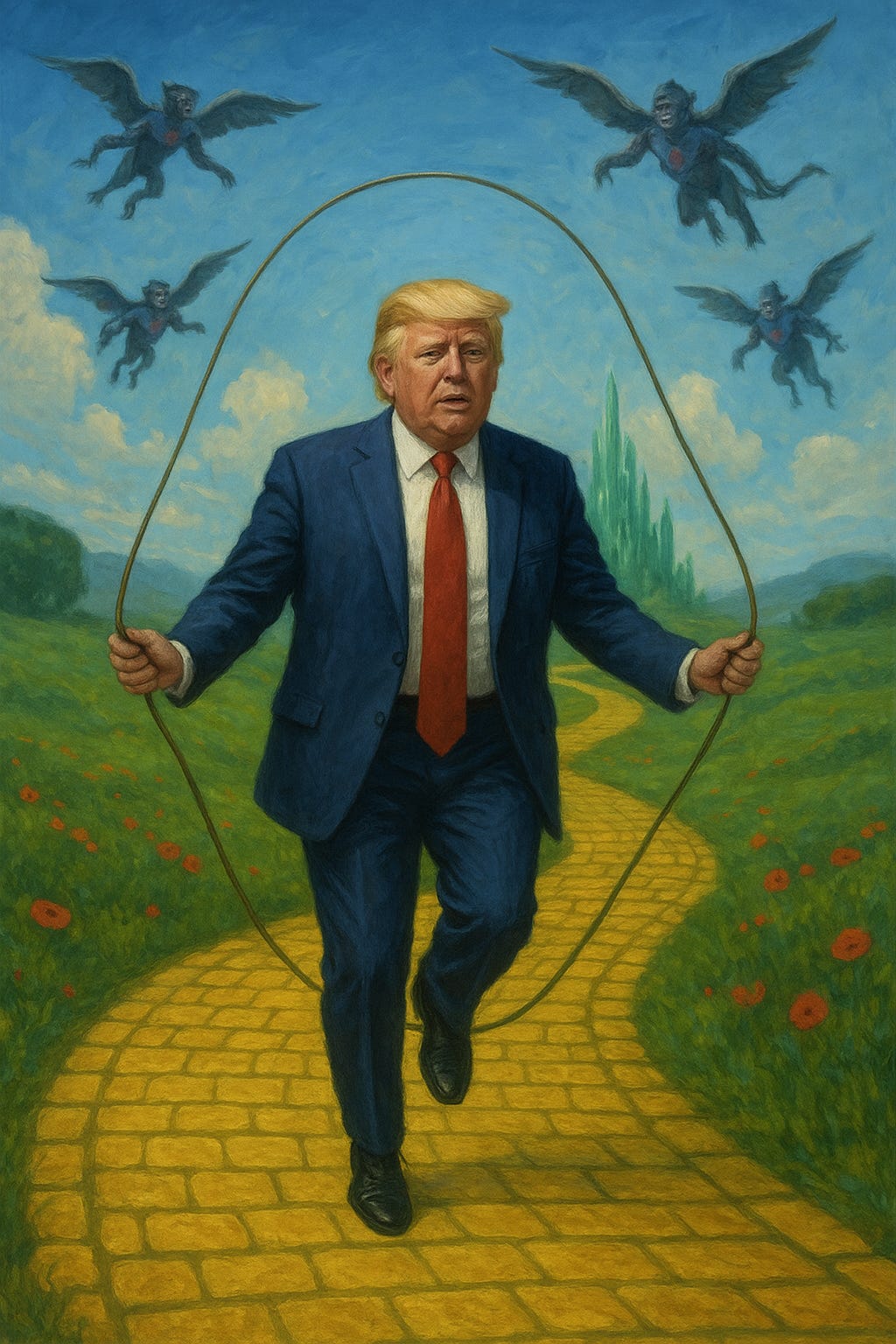
Enter Trump—or more accurately, the idea of Trump “extended”. A man already floating the fantasy of staying in office beyond two terms, he does not dream small. His playbook is simple: wrap the corporate buy-ins within the language of patriotism. Call it protecting jobs, securing supply chains, or defending America from foreign threats.
But underneath the slogans is the same move: consolidating political power by pulling corporate America into the state’s orbit. Think about the next likely targets: tech giants sitting on unmatched data, defense contractors holding the keys to AI warfare, and energy and utility companies straddling the geopolitical lines between a growing need for more and more electrical power. Time for a tangent here…As an example, I want to purchase some shares AeroVironment (AVAV) but stopped short when my research uncovered “the 55 countries that are their customers”. See, they provide uncrewed aircraft systems (drones) for precision strikes among other aggressive and defensive products. Is America wanting to shorten that customer list to say a dozen? You get my drift. Moving on, tangent over.
These are the companies too important to fail, too central to ignore, and just maybe too tempting for some politicians to resist. Owning a large slice means influence. Influence means control. Control, once seized, rarely gets handed back without a hail of gunfire and some people getting put in jail, or worse.
The danger isn’t just that it is government., rather it’s the precedent. Today it’s “national security”. Tomorrow it’s “stability.” Next week it’s “the will of the people.”
Is there a collision coming? Free markets, by definition, require independence. Once political power gets too far involved, capitalism as we know it is compromised. When the government becomes “an entity with a portfolio”, both regulatory and shareholder, you can bet the game is gonna rigged. It’s a question of the when, the where and how long it lasts.
Industrial policy in the United States does not exist in a vacuum. It collides with the messy realities of a two-party system, where every four to eight years, the presidency changes hands. Unlike China, where industrial direction can be set for decades. Washington is stuck with short-term political cycles. That makes strategic planning chaotic, reactive, and often hostage to elections, and that is before we include the public companies. How does the SEC (Securities and Exchange Commission) do its job in this environment? You thought the Federal Reserve has challenges from Trump Administration, just wait if this “buy-a-stock-alooza” keeps growing and has traction.
Donald Trump has always shown a soft spot in his heart for large public companies, maybe because he has owned and bankrupted several.
During his presidency, he openly admired leaders who could rule indefinitely. He has floated the idea of serving more than two terms. That desire collides with the 22nd Amendment of the U.S. Constitution, which caps presidents at two four-year stints. Trump cannot legally extend his tenure, but the mere fact that he continues to test the idea tells us something.
Here is the paradox. To compete with China, America must think in decades. But presidents only think in election cycles. This mismatch in time leaves U.S. industrial policy perpetually vulnerable. Our near-term needs in the electrical grid, or cutting-edge military drone equipment could stall in Congress if these companies that struck deals with the federal government become partisan footballs.
For Stock Talk readers, the takeaway is sobering. The current U.S. government may want to copy China’s success in shaping industries, but it lacks (thankfully) the political structure to do it cleanly. Every four years, the face in the White House, and strategy may change. Every eight years, leadership must change, and if and when industrial policy makes sense, it risks becoming a bargaining chip in cultural wars and even at the polls. I am firmly on the side of this strategy as “a bad idea”, to keep stretching America with its ownership of investments. We need to be a true free market, period, and I believe we will continue to be so.
Results are not typical. The methods I teach have helped other traders and investors, but there are no guarantees. Success in trading and investing takes work, discipline, and dedication. Past performance is never a promise of future results. Every trade and investment carries risk.